Spain's Grid Congestion, the Hidden Cost Behind Day Ahead Prices
Spanish congestion management is skyrocketing. Why? What are the technologies involved?
Alexandre Danthine · AAG AdvisorsWhy is the cost of congestion management in Spain rising, and which technologies are involved?
Grid access has become a central issue in Spain. New projects wait in long queues, often get only part of the capacity they ask for, and receive little or no payment when curtailed. Market design has long struggled with two gaps: the 12 to 36 hours between the day-ahead schedule and real-time operation, and a single national price that cannot see local bottlenecks. Spain's high share of variable renewables makes it a useful case.
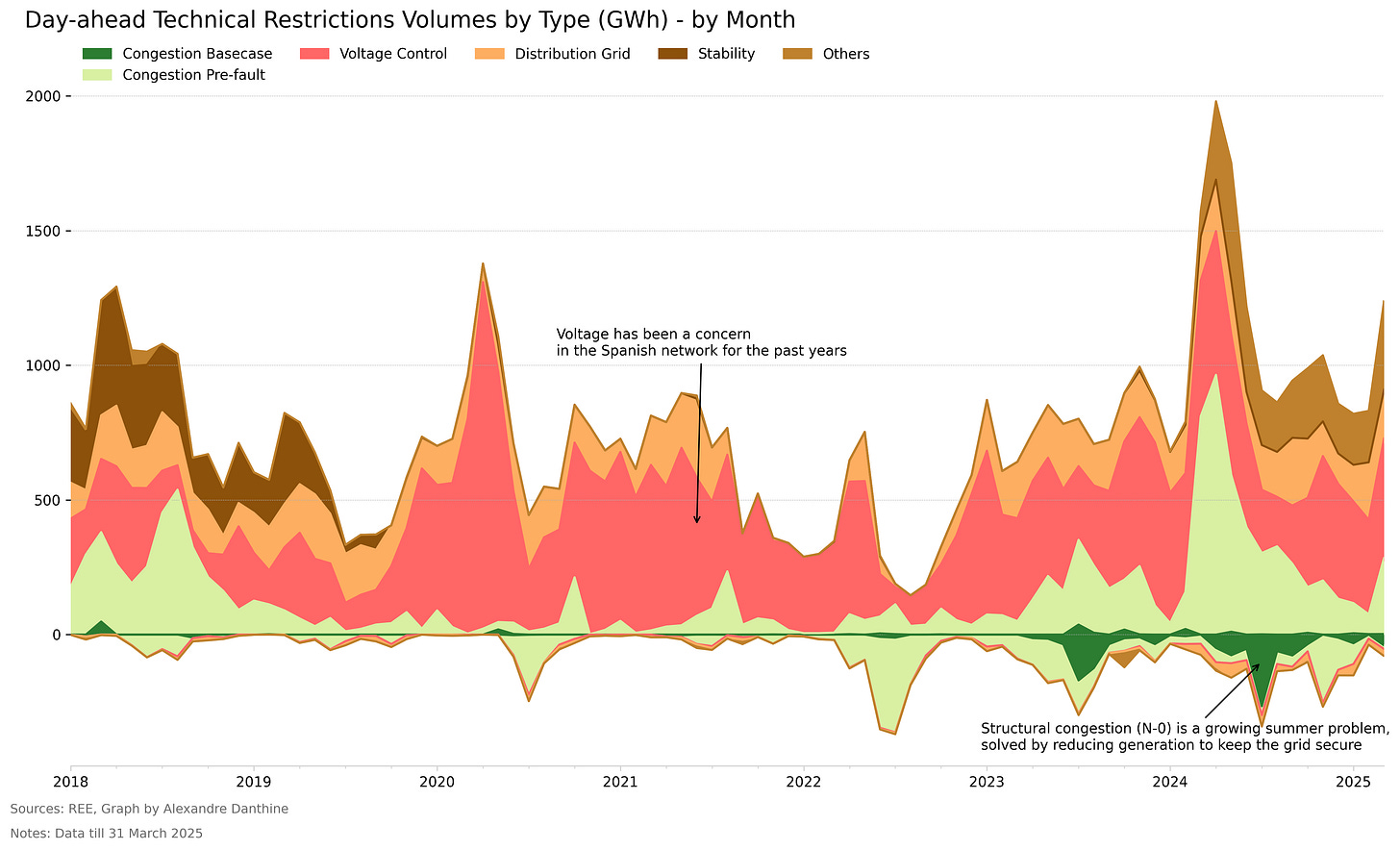
The note sets out how congestion costs arise. The day-ahead auction clears one price for mainland Spain and leaves out local network limits to protect liquidity. The technical restrictions market, cleared around 14:30, then corrects the schedule. In Phase 1, units raised for security earn their offer price and units cut back lose their day-ahead dispatch. Phase 2 restores the overall balance on a pay-as-bid basis. The adjustments address voltage control, which the system operator links to lower demand and fewer synchronous units, and congestion on overloaded lines, a share that is rising.
In the full article
- Which technologies keep the grid secure
- The role of nuclear in congestion management
- How Phase 2 works as a hidden intraday trading opportunity
- Who bears the cost of uncompensated curtailment
The complete analysis, charts and data are on Substack. Paid subscribers get every article in full, plus the monthly market reports.